Miami-Dade County · 24/7
Broken Key Extraction in Miami
Snapped a key? We remove it and cut a new one.
Up-front pricing · Damage-free first · Mobile units county-wide
Snapped a key? We remove it and cut a new one.
A key snapping off in a lock is a small problem that becomes an expensive one in about thirty seconds, because the first instinct is almost always the wrong one. People reach for superglue, tweezers, a paperclip or a thin screwdriver, and each of those makes the extraction harder: glue bonds the fragment to the wafers or pins, tweezers push the blade deeper, and a screwdriver mangles the keyway mouth so that even the correct tool can no longer be introduced cleanly.
24/7 Locksmith Miami extracts broken keys from residential deadbolts and knobsets, commercial mortise and rim cylinders, aluminum storefront hardware, vehicle doors, trunks and ignitions, padlocks, mailbox cam locks, gate hardware and cabinet locks across Miami-Dade. The physical work is usually a few minutes when nothing has been made worse first. The more important part of the visit is establishing why the key broke, because a key that snaps is almost always telling you something about the lock.
This page covers what actually happens inside a keyway when a blade fails, the tools and techniques used to recover a fragment, why the underlying cause matters more than the extraction, the specific complications of vehicle ignitions and exposed exterior hardware in this climate, what to do in the minutes after it happens, and when extraction is the wrong call. Call (786) 539-3980 and describe where the break is and how much of the key is still in your hand.
Keys do not break from bad luck. Brass and nickel silver blanks fatigue with use, and every cycle flexes the blade slightly. A key that has been duplicated repeatedly from another duplicate accumulates error and gets thinner at the shoulder and at the deepest cut, which are the two places blades fail. Add a heavy keyring, which applies constant leverage at the shoulder, and the failure becomes a matter of time rather than chance.
The other half of the cause is the lock. A cylinder that binds, whether from worn pins, grit, corrosion or a plug that is starting to seize, requires more torque to turn, and that torque goes through the blade. In Miami-Dade, salt air and sand do most of that work: exterior hardware in Key Biscayne, Surfside, Miami Beach and any coastal property corrodes from the inside, and beach sand packs into keyways with remarkable efficiency. A key that needed jiggling for months before it broke was warning you the whole time.
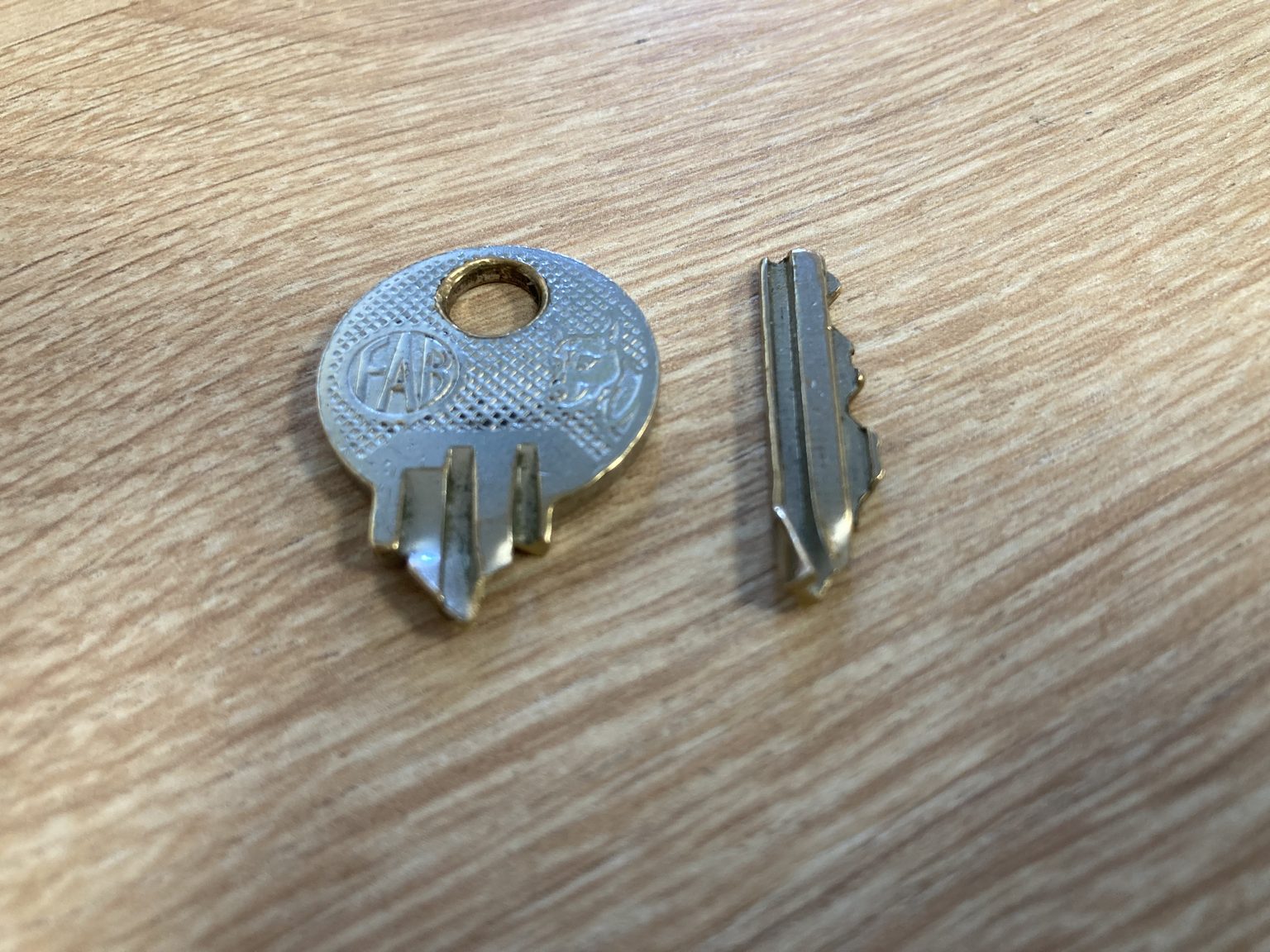
When a blade shears, the fragment remains in the plug with the pins or wafers still bearing down on its cuts under spring pressure. That pressure is what holds the fragment in place, and it is also what makes a simple pull ineffective: the pins sit in the valleys of the cuts and act like detents. If the break happened mid rotation, the plug may also be turned partway, which means the fragment is not aligned with the keyway opening and cannot come straight out at all.
Where the fragment sits matters. A break at the shoulder leaves nearly the whole blade inside and flush with the face, with nothing to grip. A break at a deep cut near the tip leaves most of the blade in your hand and a short piece deep in the plug. A fragment pushed deeper by an attempted removal may be past the last chamber, where there is no longer a convenient cut to engage. Each of these needs a different approach, which is why the first question is where it broke.
The primary tools are thin steel extractors designed to enter the keyway alongside the fragment. A spiral extractor has a corkscrew profile that is inserted past the blade and twisted so the spiral bites into the brass, then withdrawn. A hook or barbed extractor slides along the keyway and engages one of the blade's own cuts or the tip, pulling it out. Better sets include several profiles, because keyway geometry varies enormously and what fits an automotive wafer keyway will not enter a narrow residential paracentric one.
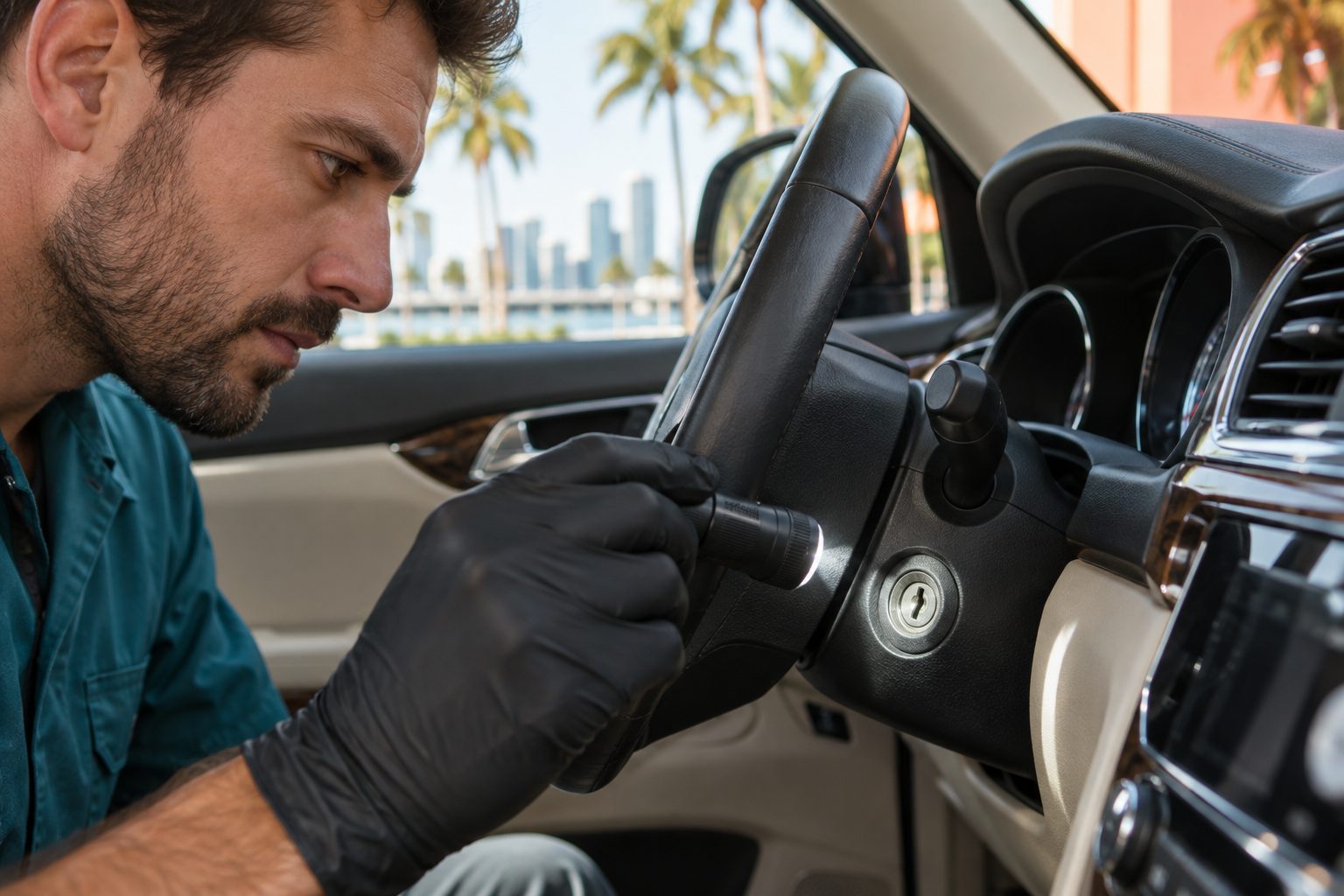
Technique is what separates a clean job from a cylinder replacement. Two extractors used together, one on each side of the blade, give balanced pull and stop the fragment twisting. Light tension on the plug can relieve pin pressure enough to let the fragment move. A borescope or a strong light lets the work be observed rather than felt. And the pull is steady rather than sharp, because a snatched extractor either slips off the cut or snaps its own tip inside the plug, which is the worst outcome available.
Sometimes the fragment cannot be recovered in place. A blade driven deep past the last chamber, a plug that broke while turned, a fragment that has been glued, or a keyway already damaged by an amateur attempt all point the same direction: remove the cylinder, disassemble it on a bench, and recover the fragment with the pins and springs controlled by a follower tool. This is slower, and on an assembled door it means getting the lock apart first.
Removal difficulty varies hugely by hardware. A residential rim cylinder comes out with two screws from the inside. A mortise cylinder unscrews once a set screw in the faceplate is released. A 1-1/8 inch mortise cylinder in an aluminum storefront stile is straightforward. A bored knobset needs the lock disassembled. A vehicle door cylinder may need an interior trim panel off. An ignition cylinder means column shrouds and a retaining pin sequence. All of this is why the same broken key is a different job on different hardware.
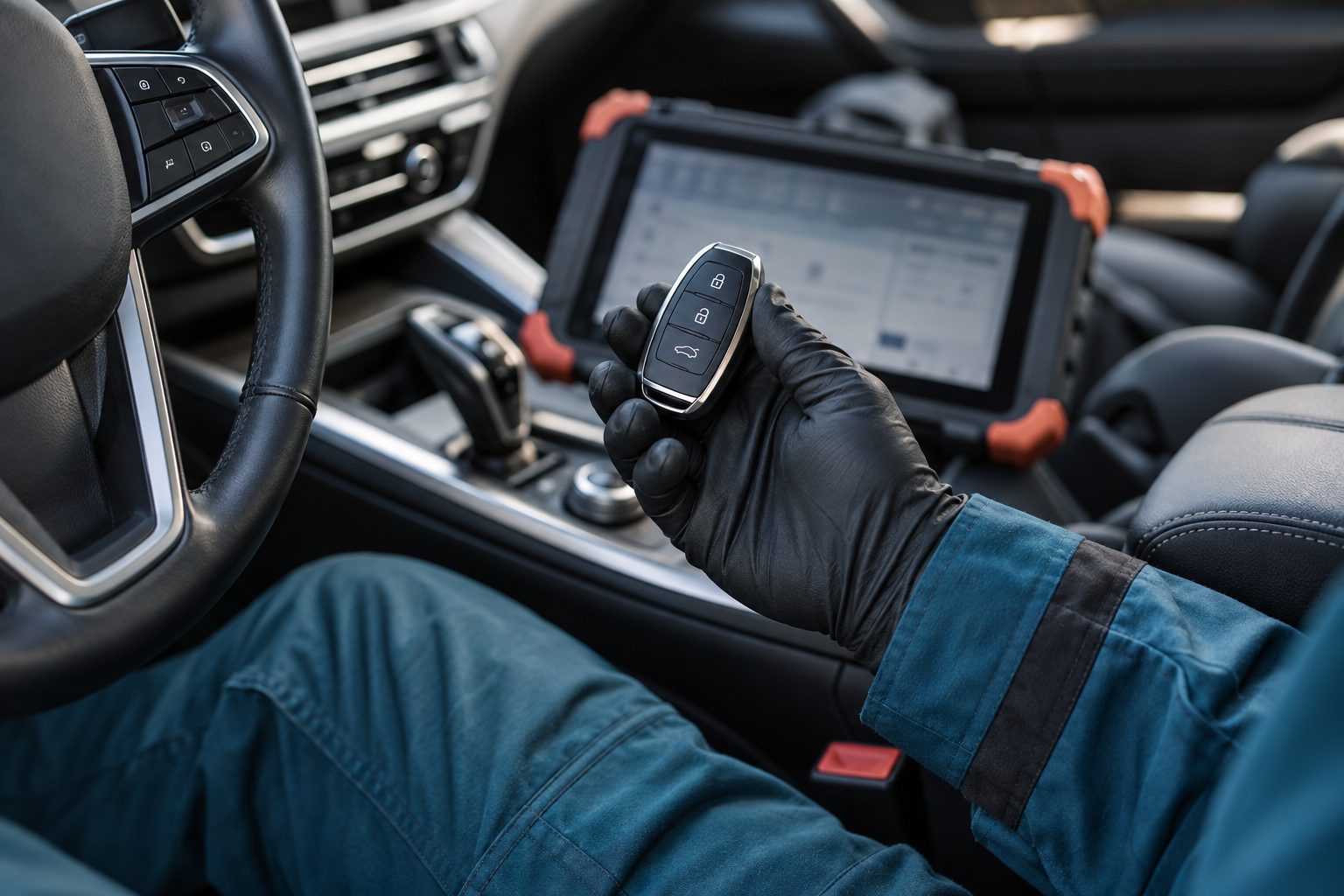
This is the hardest common version, because the ignition is the most heavily cycled lock on the vehicle and access is constrained. The wafer stack is usually worn, which is often why the key broke, and the fragment sits in a plug surrounded by the column assembly with the immobilizer antenna ring wrapped around it. Working blind is a bad idea here: the ring is easily damaged, and damaging it produces a vehicle that cranks and will not start long after the key problem is solved.
The extraction itself uses the same tools with less room to use them. What follows matters more. A key that broke in an ignition almost always means the cylinder needs attention, either a rebuild with new wafers and springs keyed to your existing key, or replacement if the housing, cam or rack is damaged. It also usually means the key itself is worn past its useful life, so a fresh key cut from code rather than duplicated from the surviving half is the sensible outcome.
Broken keys cluster in exterior hardware for a reason. Gate locks, security bar door locks across Hialeah, Little Havana and Allapattah, pool gate cylinders, padlocks on sheds and storage cages, mailbox cam locks and rolling steel door bottom bar cylinders all sit fully exposed. In this county that means rain, humidity and, near the water, salt. Plated pot metal cylinders corrode from the inside out, the plug seizes progressively in the shell, and the torque needed to turn rises until the blade gives way.
On those cylinders, extraction is frequently the smaller half of the job. A plug that has corroded enough to snap a key is usually at the end of its life, and repinning it will not restore it. The honest answer is often replacement with hardware specified for the exposure: satin stainless in the 630 finish as a baseline, Type 316 stainless for the worst positions, and solid brass or bronze bodies rather than plated pot metal. Otherwise the same key breaks again in the same lock next year.
Small hardware has its own character. Padlock keyways are short and shallow, so a fragment has less room to be engaged and there is rarely space for two extractors. Many padlocks are also not worth the extraction: a low cost weatherbeaten padlock on a shed gate is quicker and cheaper to cut off and replace than to recover. Where the padlock is a high security or restricted item, the calculus flips and careful extraction is worth the time.
Mailbox cam locks are shallow and often loose in their mounting, which means the whole lock body rotates when tension is applied and an extractor cannot get purchase. These are usually replaced rather than recovered, which raises the ownership question immediately: some cluster box and gang box units belong to the postal service and cannot be serviced by a private locksmith, while others belong to the property or the resident. Establishing which applies is the first step, before any tool touches the lock.
Do not use superglue on anything. The idea is intuitive and it fails badly: glue wicks along the blade and bonds it to the pins or wafers, or bonds the protruding stub to the plug face, and what was a five minute extraction becomes a cylinder removal and a bench strip. Do not push anything into the keyway alongside the fragment, because tweezers, paperclips, staples and knife blades all drive the blade deeper, past the point where a cut is available to engage.
Do not force the plug to turn with pliers on a protruding stub, because if the plug rotates with the fragment inside, the blade is no longer aligned with the keyway and cannot be withdrawn at all. Do not spray a general purpose penetrating oil into the cylinder, since most leave a residue that attracts dust and grit and makes the lock worse afterward. And do not keep trying the other half of the key in the lock, which pushes the fragment further in every time.
Stop. Leave the fragment exactly where it is. If part of the blade protrudes and you can grip it with your fingers, one gentle straight pull is reasonable; if it does not move, stop there. Make sure the plug is returned to the vertical or upright position if the key was turned, because a plug at rest in its normal position is the one position from which a fragment can come straight out. Then keep the piece you are holding, because it shows the bitting and lets a replacement be cut accurately.
When you call, say where the break is: flush with the face, protruding slightly, or deep with most of the key still in your hand. Say what the lock is: residential deadbolt, knobset, mortise cylinder, storefront door, vehicle door, ignition, padlock, mailbox. Say whether the plug is turned. Say whether anyone has already tried to remove it and with what. And say whether this lock has been sticking or needing a jiggle recently, because that answer usually predicts what has to happen after the extraction.
The extraction itself is usually modest work, and the variables are the hardware type, how deep the fragment sits, whether the plug is turned, whether the cylinder has to come out and how hard it is to remove, and whether previous attempts have complicated it. Ignitions sit at the high end because of column access. A storefront mortise cylinder or a residential rim cylinder sits at the low end. The service call and the hour apply as on any job.
It is the wrong call in a few situations. If the lock is a cheap padlock on a shed, cutting and replacing is faster and cheaper than recovering. If the cylinder is corroded enough that a key snapped in it, the real job is a replacement cylinder specified for the exposure, and extraction alone just resets the clock. If the key broke in an ignition, the ignition needs attention as well. And if you need entry urgently, sometimes opening the lock by other means comes first and the extraction follows.
This service is available across all of Miami-Dade County, see our full coverage map or just call and tell dispatch where you are.
One number, any hour: a live dispatcher and a mobile technician near you.