Miami-Dade County · 24/7
Key Fob Programming in Miami
Fobs and smart keys programmed at your location.
Up-front pricing · Damage-free first · Mobile units county-wide
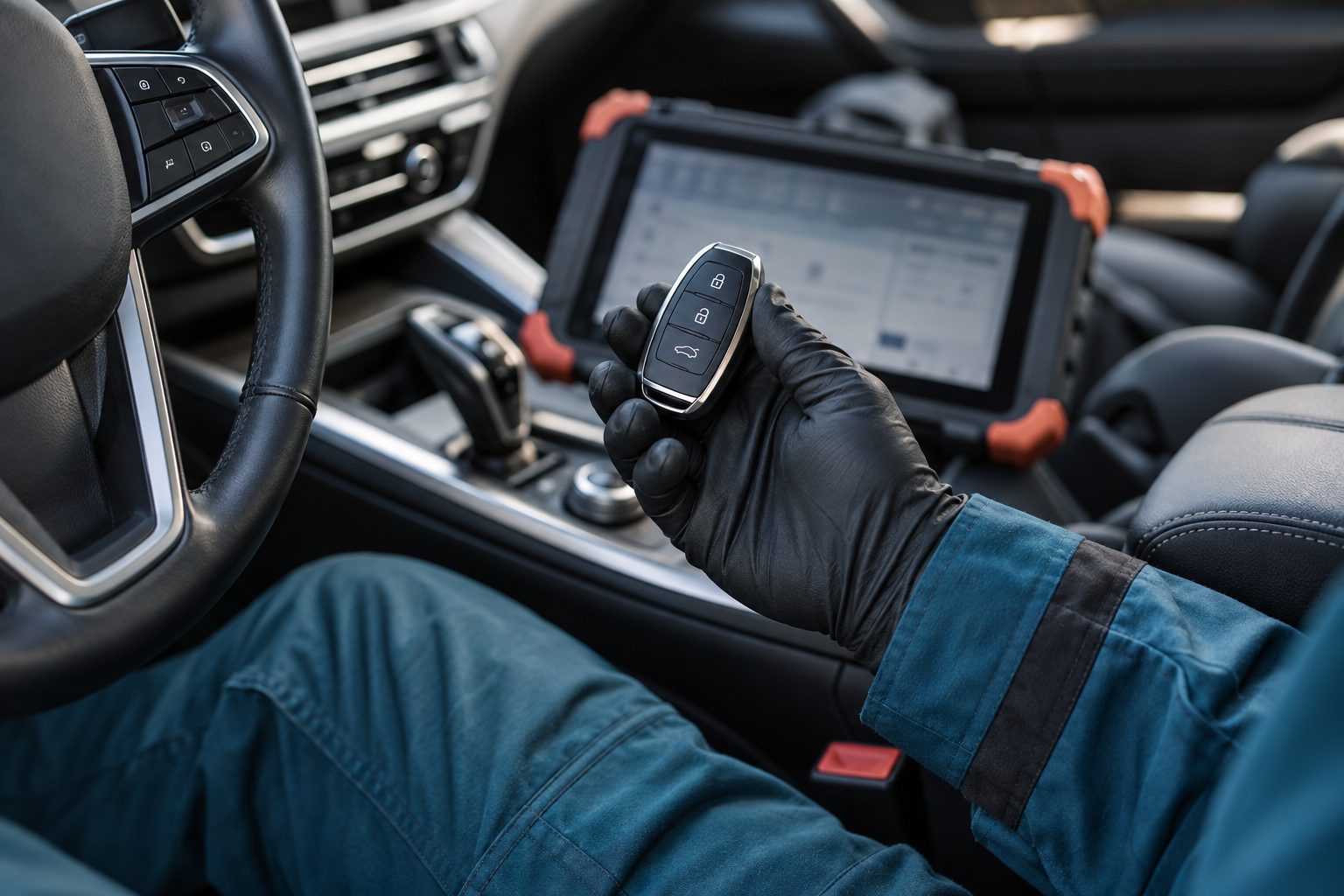
Fobs and smart keys programmed at your location.
Key fob problems arrive described three different ways that all sound identical: the fob stopped working, I need another fob, and I lost my fob. Those are three genuinely different jobs. The first is usually a repair or a battery. The second is a programming session on a vehicle that already has working credentials. The third is frequently an all keys lost situation in disguise, particularly on a push to start vehicle where the fob is the only key anyone carries.
24/7 Locksmith Miami programs and services fobs across Miami-Dade, at the vehicle, which matters because a push to start car with no working fob is a car that cannot be driven anywhere. That describes a great many vehicles sitting in residential tower garages in Brickell, Aventura and Sunny Isles Beach, in the Dadeland decks, in driveways across Kendall and Pinecrest, and in strip centre lots along West 49th Street, Bird Road and Kendall Drive.
This page explains how fobs actually work, why compatibility is so much narrower than the physical shell suggests, the difference between a remote, a transponder and a proximity credential, what happens during a programming session, why aftermarket fobs sometimes fail, and how to tell a fob fault from a vehicle fault. Call (786) 539-3980 with the year, make, model and trim, and say whether any working fob or key still exists.
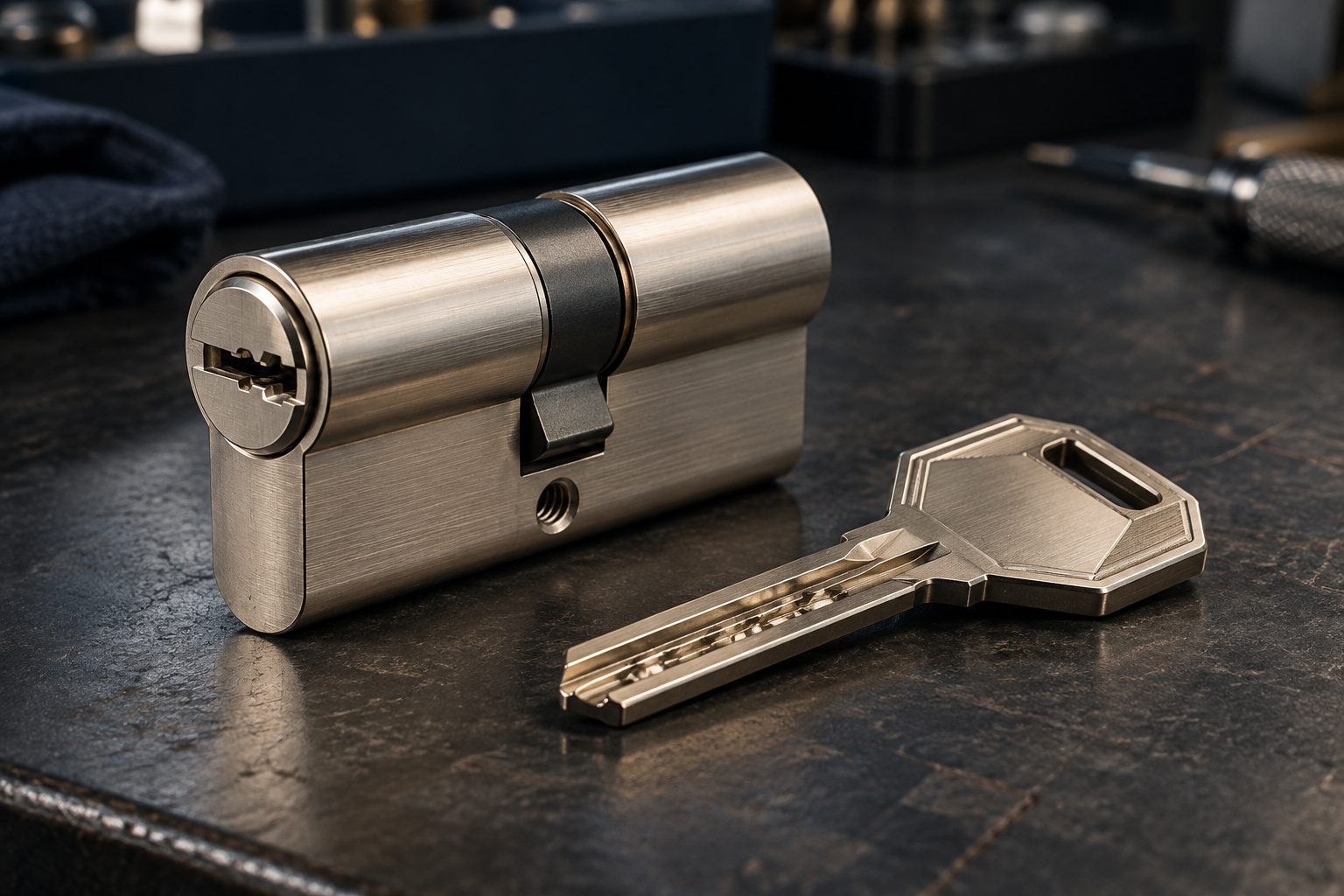
A remote is a radio transmitter that operates lock, unlock, trunk and panic functions. It talks to a receiver in the vehicle, it runs on a battery, and it has nothing to do with starting the engine. A transponder is a passive chip, usually in the head of a key, energised by a coil and answering an immobilizer challenge. It has no battery of its own and it does not transmit at range. Many keys contain both, which is where the confusion starts.
A proximity credential combines both with a low frequency wakeup field, letting the vehicle detect the fob's presence and approximate location so the doors unlock on touch and the start button works without inserting anything. Diagnostically these separate cleanly. If the doors will not unlock at range but the car starts when the fob is held against the column or the start button, the radio side has failed and the transponder side has not. If the doors unlock but the car will not start, the reverse is true.
The most common cause by a wide margin is the battery, and the symptom pattern is characteristic: range shrinks gradually over weeks until you have to be almost touching the door, then it fails entirely. Second most common is physical damage to the button pad or the board, usually a cracked solder joint under a button that has been pressed several thousand times, or a broken trace from a drop onto concrete. Third is water, which in this climate means rain, pools and the ocean, and which corrodes a board quietly over days.
Less obvious causes exist. The vehicle's receiver or antenna can fail rather than the fob, which is why a second fob behaving identically is diagnostically important. Aftermarket alarms and remote starters sometimes interfere with factory receivers. Radio frequency interference in dense environments is real, and structured garages full of concrete and equipment are exactly where it shows up. A fob that works fine outdoors and poorly on a lower parking deck is usually not a broken fob.
Two fobs that look identical, with the same button layout and the same shell, can be entirely different electronically. The variables are the transmitting frequency, which differs across markets and manufacturers, the chip generation used for the immobilizer side, the part number family and firmware the vehicle expects, and in some cases whether the vehicle was built before or after a mid cycle change. A fob that physically fits your ignition or looks right in your hand is not evidence that it will program.
This is why the intake questions are so specific, and why the number printed on the back of your existing fob is genuinely useful if you have one. It is also why buying a fob online and then looking for someone to program it goes wrong so often. If the part is not the right one, no amount of programming skill will enrol it, and the money spent on the part is gone. Checking compatibility before sourcing anything is the cheapest step in the whole process.
The vehicle has to be put into a state where it will accept a new credential, and how that state is reached varies enormously. Some older vehicles use an onboard procedure: a defined sequence of key cycles, door actions and button presses that puts the receiver into learn mode. Most modern vehicles require a diagnostic tool connected to the vehicle's port, communicating with the immobilizer or body control module, authenticating with a security code or seed and key exchange, and then writing the new credential into the module's list.
Where a working key or fob still exists, the process is typically an add routine: the existing credential authorises the session and the new one is added alongside. Where none exists, the module has to be reached from a locked out state, which can mean retrieving a PIN, reading the module directly, or waiting out a manufacturer imposed security delay before an enrolment is accepted. Programming draws on the vehicle's battery, so a weak battery can stall a session partway, which is a situation nobody wants.
Original equipment fobs, meaning parts made to the manufacturer's specification, program predictably and hold programming. Aftermarket fobs vary widely. Some are excellent and indistinguishable in function. Others enrol and then lose programming, have weak transmit range, use button pads that fail early, or fit the shell but carry a chip generation the vehicle rejects outright. Price differences usually reflect something real, and the cheapest option is frequently the one that stops working in four months.
Refurbished and used fobs occupy their own category. A used fob from another vehicle can often be reprogrammed, but not always: some are locked to the vehicle they were first enrolled on and cannot be transferred, which is a deliberate anti theft design. Shell replacement is a separate and often sensible service, where the electronics from a cracked or water damaged fob are transferred into a new case with a new button pad, which is cheaper than a new fob and keeps the existing programming intact.
Push to start vehicles introduce a lockout pattern that catches people out constantly. Many lock automatically when the proximity fob moves away from the vehicle, which is exactly what happens when a driver walks to a garage elevator in a Brickell or Aventura tower with the fob still in the centre console or a bag on the seat. Others lock on a timer, or on doors closing with the vehicle off. The owner pressed nothing, which is why it feels like a malfunction rather than the designed behaviour it is.
Nearly every proximity system retains two fallbacks worth knowing before you need them. There is usually a hidden door cylinder, often behind a cap on the driver's handle, operated by a small emergency insert blade that lives inside the fob itself. And there is usually a backup start method for a dead fob battery, typically holding the fob against a specific point on the column, the start button or the console so the low frequency field can still energise the transponder. Both are in the owner's manual.
The most useful diagnostic is a second fob. If both fobs behave identically, the fault is almost certainly in the vehicle: the receiver, an antenna, a module, a fuse or a wiring fault. If one works and the other does not, the fault is in the failing fob. Without a second fob, the pattern still tells you something. Intermittent operation that improves when close to the vehicle points at a weak fob battery or a weak transmitter. Total failure of the radio side while the car still starts points at the fob's transmitter or the vehicle's receiver.
Some symptoms are not fob problems at all. A car that cranks and will not start may have a fuel, spark or sensor fault. A car that will not crank is more likely a battery, starter or ignition switch electrical problem. Doors that will not unlock with a key either may be a central locking actuator. Working out which category you are in before ordering a fob saves both the part cost and the visit, and that diagnosis is part of the call.
Fob programming is done at the vehicle because a vehicle with no working fob generally cannot be driven to anyone. In this county that frequently means a controlled access garage. Brickell, Aventura, Sunny Isles Beach, Downtown, Edgewater and Dadeland put a large share of cars on numbered decks behind gates that read only resident transponders, so access has to be arranged: meeting the technician at the ramp, having the desk open the gate, or escorting a technician in on foot with tools.
Elsewhere the logistics are simpler and the environment is not. A driveway in Kendall, Pinecrest or Palmetto Bay is straightforward. A swale in Hialeah or Little Havana is tight but workable. A strip centre lot along Bird Road or West 49th Street needs the anchor store and the row to be findable. A truck court in Doral or Medley needs a gate code or a guard cleared first. Say where you are precisely, because a programming session cannot be done from across a parking lot.
The part is the first variable and it is not small. A basic remote, a remote head key with an integrated blade, and a proximity fob with a bidirectional encrypted chip are three different tiers of hardware. The second variable is whether a working credential still exists, because an add routine and a recovery from a locked out state are different amounts of work. The third is the programming route the manufacturer permits, which on some vehicles is quick and on others involves module access and a security delay.
Then there is the service call itself across a county this large and the hour of day. What should not change the number is urgency, and a quote given against an accurate description of year, make, model, trim and credential situation should hold. Where it legitimately shifts is when the vehicle turns out to use a different key platform than the trim suggested, or when what was described as a dead fob turns out to be a failed receiver in the vehicle, which is a different repair entirely.
If the fob is physically intact and the battery is fresh but nothing works, and a second fob behaves the same way, do not buy a fob. The fault is in the vehicle and a new credential will not fix it. If the fob has water damage, a shell replacement that transfers working electronics is often better than a new fob. If the button pad has failed but the transponder side still starts the car, the cheap repair is the right one and a full replacement is overspending.
If every fob is genuinely gone on a push to start vehicle, this is not a programming job, it is an all keys lost origination, and it is worth understanding what that entails before starting: deriving the credential, reaching the module from a locked out state and, on many vehicles, erasing the enrolled key list so that any fob still in existence stops working. And if the vehicle's ownership is unclear or disputed, no fob should be programmed to it at all, which is why proof of ownership is required.
This service is available across all of Miami-Dade County, see our full coverage map or just call and tell dispatch where you are.
One number, any hour: a live dispatcher and a mobile technician near you.