Miami-Dade County · 24/7
24/7 Emergency Locksmith in Miami
Nights, weekends, holidays, we answer.
Up-front pricing · Damage-free first · Mobile units county-wide
Nights, weekends, holidays, we answer.
Emergency locksmith work is defined by what cannot wait rather than by what time it is. A house that cannot be secured after a break in cannot wait. A business whose front door will not lock at closing cannot wait. A car key lost at a trailhead in south Dade with no ride home cannot wait. A commercial freezer door that has failed shut cannot wait. Most of the rest, however inconvenient, can be handled during the day for less money, and knowing which category you are in is worth something.
24/7 Locksmith Miami takes calls around the clock across Miami-Dade, and the county produces a distinctive pattern of them. Late night lockouts in Wynwood and on Ocean Drive where bars and galleries run long. Early morning commercial calls in Doral and Medley where warehouses open before dawn. Tower garage lockouts in Brickell and Aventura where a proximity fob locked itself in a console. Storm season calls where water, wind and power failures produce a cluster of door and access failures at once.
This page covers what genuinely qualifies as an emergency, what to do before anyone arrives, how after hours work differs in what can actually be completed, the specific emergencies where you should be calling 911 rather than a locksmith, and how to secure a property when a full repair is not possible tonight. The number is (786) 539-3980, and the first sentence of the call should be what is wrong and whether anyone is at risk.
A child or an animal shut inside a vehicle is a 911 call, always, before anyone else is contacted. A closed car in South Florida sun becomes dangerous far faster than people expect, and fire rescue and police are closer to almost every address in the county than any service vehicle and are equipped and authorized to act immediately. The same applies to a person trapped inside a building, a medical situation behind a locked door, and anyone shut in a walk in cooler or freezer.
Call us afterward if the vehicle or the door still needs opening cleanly, or if emergency services resolved the immediate risk and the hardware remains locked or damaged. If you do call us while someone is at risk, say so in the first sentence, because it changes how the call is handled from that moment. Nobody should be weighing a door seal or a cylinder against a person in a hot car. The hardware is replaceable and the calculation is not close.
Do not go inside if you arrive to find a door forced or a window broken, and do not touch anything. Call the police from outside and wait. Beyond the obvious safety reason, the report matters for your insurer, and the sequence of events being documented properly is worth more than getting the door shut an hour sooner. Once police have released the scene, the locksmith work begins, and it is usually larger than a lock replacement.
A forced door rarely fails at the lock. It fails at the strike, where a bolt tore through a thin plate and short screws, or at the jamb, where the frame split, or at the slab around the bore. Putting a new lock into a split jamb accomplishes nothing. The correct work is to assess the whole opening, repair or reinforce the frame and strike, and then fit hardware appropriate to how the attack actually happened. Where a full repair is not possible that night, securing the opening properly comes first and the repair follows.
Some lockouts are urgent for reasons that have nothing to do with the door. A vehicle running with the doors locked, which happens more often than people admit. Medication inside a house that someone needs tonight. A pet inside without water in a house with no air conditioning running, which in this climate is a real concern rather than a sentimental one. A business whose stock is perishable or whose failure to open costs a day of trade. A rental property with guests arriving.
Others feel urgent and are not, which is worth being honest about because after hours work costs more. A second car locked in a driveway when another vehicle is available. A shed or a storage cage. A mailbox. An interior door. A lock that is stiff but still working. If the situation can safely hold until morning, holding it until morning is usually the cheaper decision, and a straight answer about which category you are in is part of what a phone call should give you.
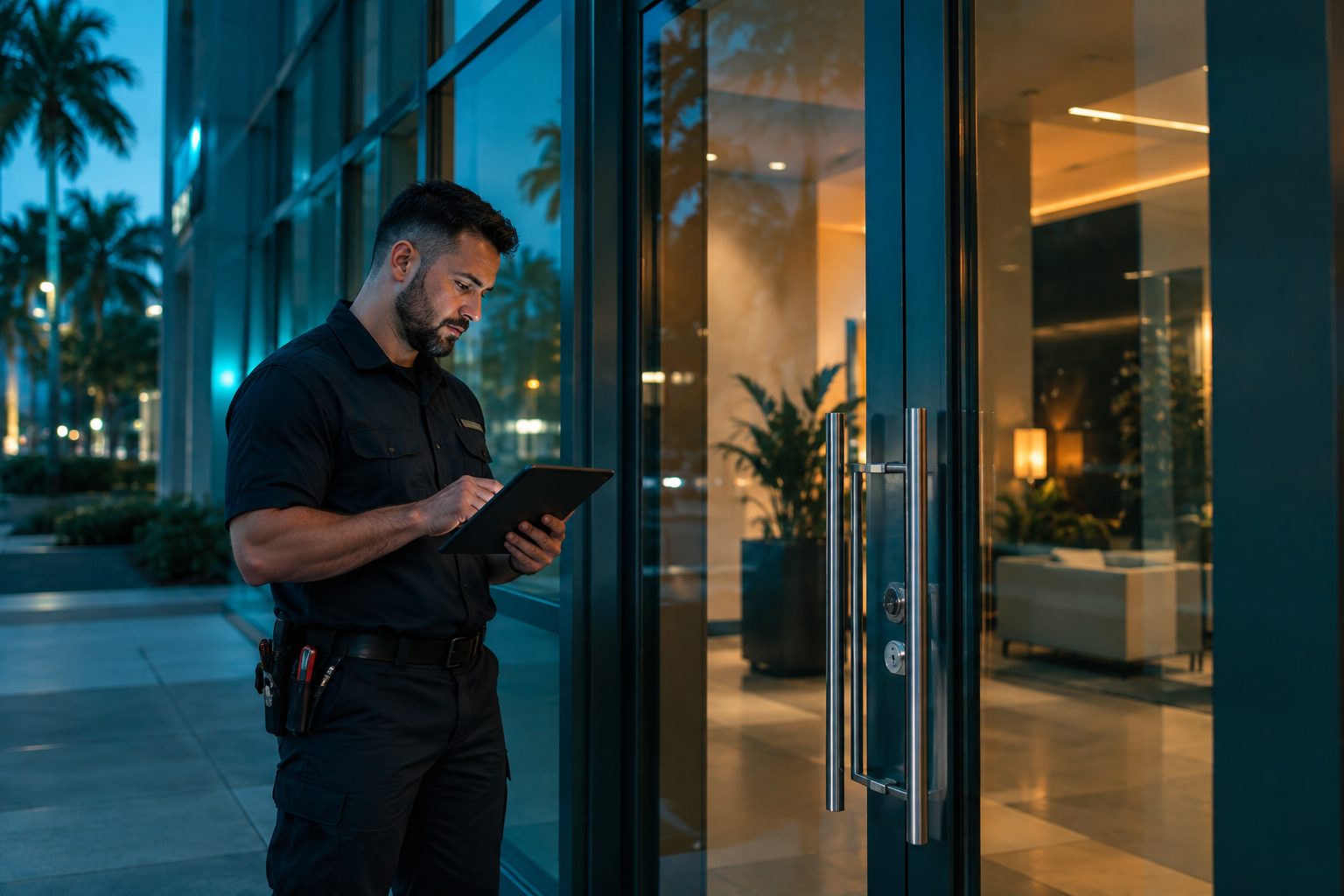
The recurring commercial emergency is a door that will not lock at closing, and it is urgent because an unsecured premises cannot simply be left. The causes are predictable: a seized cylinder on a storefront MS deadlock, a vertical rod exit device that has drifted out of adjustment and no longer latches at head and sill, a closer that has failed so the door never fully closes, a frame that has racked, or an electric strike that will not re-engage after a power event.
Where a full repair cannot be completed on the spot, securing the opening properly is the immediate objective and the permanent fix follows during trading hours. That might mean a temporary cylinder, a replacement latch, a mechanical override arrangement on an access controlled door, or in the worst case a board and secure approach on a damaged opening. What it never means is defeating free egress on a required exit door, which stays true at two in the morning with a manager standing there asking.
Lost keys away from home are a specific kind of emergency because the vehicle cannot move. That happens at Homestead Bayfront Park, at the Everglades and Biscayne park gateways in Florida City, at the beaches along Key Biscayne and Miami Beach, in the Dadeland and Aventura Mall decks, at the airport periphery in Miami Springs, and in the truck courts of Doral and Medley where a work vehicle stranded overnight is a lost day.
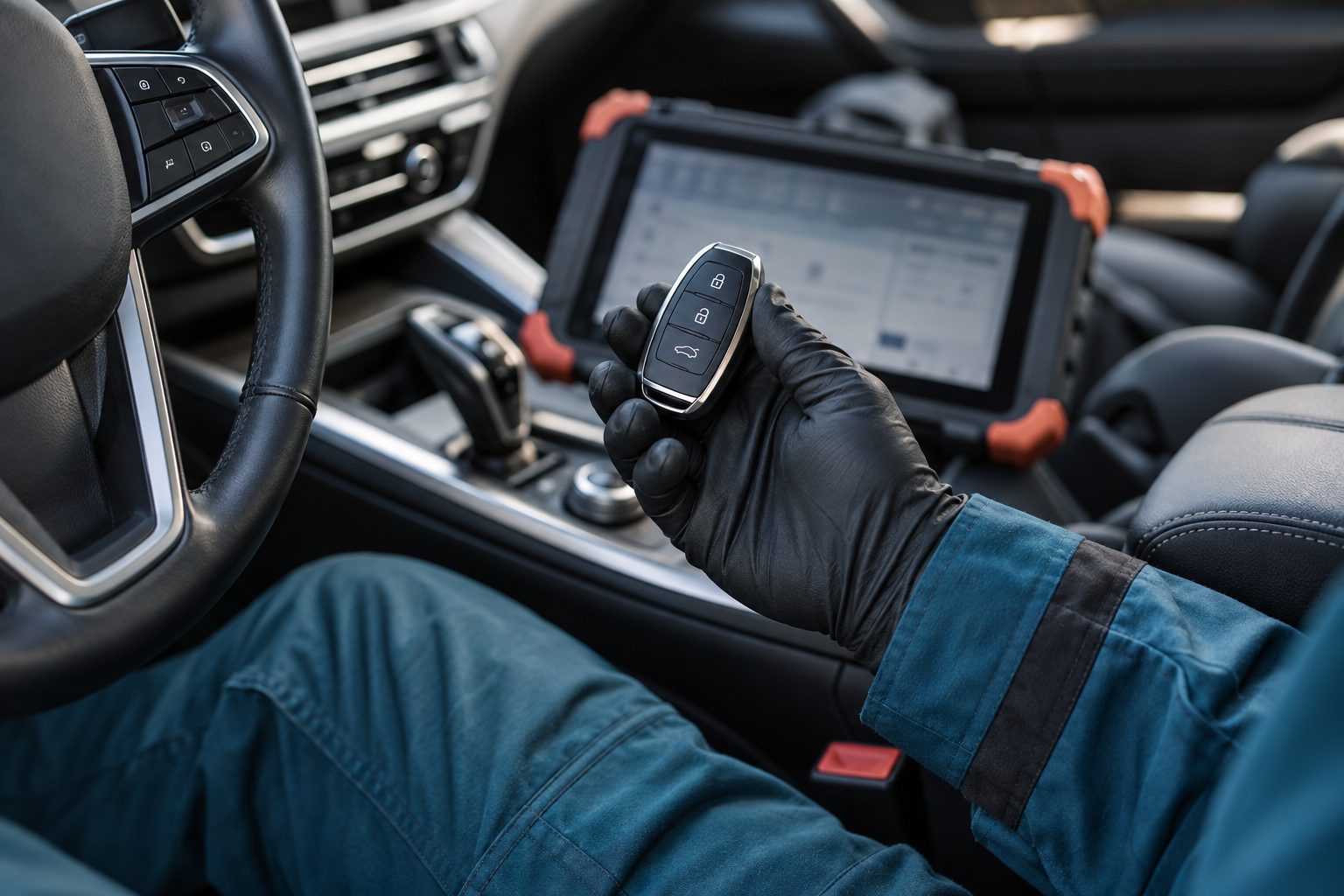
Mobile key origination is the answer to most of these, because the work happens where the vehicle stands rather than requiring a tow. What the situation needs from you is precision about location and vehicle, and realism about what the manufacturer permits. Some vehicles require a security code or dealer level access that is not obtainable at three in the morning. Where that is the case, the honest answer given on the phone saves you a wasted wait, and the alternative is usually securing the vehicle and arranging the work for when the channel opens.
Hurricane season produces a cluster of access problems that are not obviously lock problems. Power failures take down card readers, electric strikes and maglocks. Whether that locks a door or unlocks it depends on whether the device is fail safe, which unlocks when power is lost as code requires on many egress paths, or fail secure, which stays locked. Knowing which devices in your building are which, before a storm, is genuinely useful information.
Water and wind do the rest. Doors swell and bind. Frames rack under wind load and stop aligning with strikes. Water intrusion corrodes exposed cylinders quickly, and salt spray driven inland during a storm reaches hardware that normally never sees it. Debris damages storefront doors and rolling steel curtains. Before a storm, the useful preparation is knowing where your mechanical override cylinders are, having those keys accessible, and making sure the hardware you will depend on is working while there is still time to fix it.
Availability does not change. What changes is what can be completed. Restricted and patented keyway cylinders come through a controlled supplier or management channel that is closed overnight. Hardware that has to match a Miami-Dade Notice of Acceptance listing on an impact rated assembly has to be sourced to match rather than pulled off a vehicle. Some vehicle key procedures require a manufacturer channel that is not open. Specialist commercial parts, particular exit device latches and multipoint gearboxes may need ordering.
The practical consequence is that a lot of after hours work is correctly split into two stages: make it safe and secure now, complete it properly later. That is not a shortcut, it is the right sequence. A business that is secured tonight and repaired at nine in the morning is better off than one waiting for a part while its door stands open. Being told which stage you are in, and what the second stage will involve, should happen before the first stage starts.
In a condominium tower the emergency frequently is the access procedure rather than the lock. A resident standing on a lower parking deck with the ring containing car key, building fob and garage transponder locked inside the car cannot get back up to the lobby, because the stair and elevator doors on the garage side read the same fob. The front desk can normally resolve it, which is a good reason to know whether your building has staffed coverage overnight.
Gated communities across West Kendall, the Hammocks, Doral and Miami Lakes add a call box or guard station that must clear a technician before anyone reaches the address. At two in the morning that can be slow. Telling us the access procedure at intake removes most of the delay. The broader lesson is worth acting on in advance: keeping the building fob and the garage transponder on a ring separate from the car key turns a compound lockout back into a simple one, and it costs nothing.
Move somewhere safe and well lit, particularly late at night, and stay with your vehicle or your property rather than wandering to find better signal. Keep your phone reachable, because the technician may call from a gate, a call box, a lobby desk or a garage ramp and in a controlled access building that call is the only way in. If you are on a lower parking deck, send your exact position by text while you still have signal, then go where you can be reached.
Gather what will be needed. Photo ID and proof of address for a residential opening, or registration or insurance for a vehicle, or documentation of your authority over a business premises. Your alarm code if opening the door will trip a monitored system. Any existing keys, including ones that no longer work. Clear the approach, secure any dog, turn on an exterior light. And use the time to check the obvious alternatives: another door, a spare with a neighbour, a manufacturer app with remote unlock.
After hours work costs more than daytime work, and that should be stated plainly on the phone before anyone is dispatched. The variables are the same as always, the service call across a large county, the method required, the hardware involved and the number of openings, with the hour as an additional factor. What should not happen is a low figure quoted on the phone that turns into a much larger one once someone is standing at your door and you feel you have no choice.
The protection is straightforward and worth using at your most stressed moment. Confirm the company name when the call is answered. Get a quote before dispatch and confirm what it covers. Expect the technician who arrives to know what you described. Ask what happens if the job turns out to be different from the description, and expect the answer to be that work stops and you get a revised number before continuing. Those four questions take a minute and they filter out a great deal.
This service is available across all of Miami-Dade County, see our full coverage map or just call and tell dispatch where you are.
One number, any hour: a live dispatcher and a mobile technician near you.