Miami-Dade County · 24/7
House Lockout Service in Miami
Locked out of your home? We'll get you back inside.
Up-front pricing · Damage-free first · Mobile units county-wide

Locked out of your home? We'll get you back inside.
A residential lockout is a diagnosis before it is an opening. The same sentence, I cannot get into my house, covers a door that is simply locked with the key inside, a cylinder that has seized, a latch that has failed, a bolt binding against a shifted strike, a broken key in the keyway and a lock that was tampered with before you arrived. Each of those needs a different first move, and picking the wrong one wastes time and sometimes makes the situation worse.
In Miami-Dade the diagnosis gets an extra layer because the housing stock spans a century of wildly different construction. A 1920s wood frame cottage in Little Havana with an original mortise body and a surface night latch added in 1960. A concrete block and stucco house in Hialeah or Westchester with a bored knobset, a deadbolt and a security bar door carrying its own lock in front of both. A post Andrew house in Cutler Bay or West Kendall with an impact rated assembly and a multipoint gearbox. A condominium unit door in Brickell on a building master with a restricted keyway.
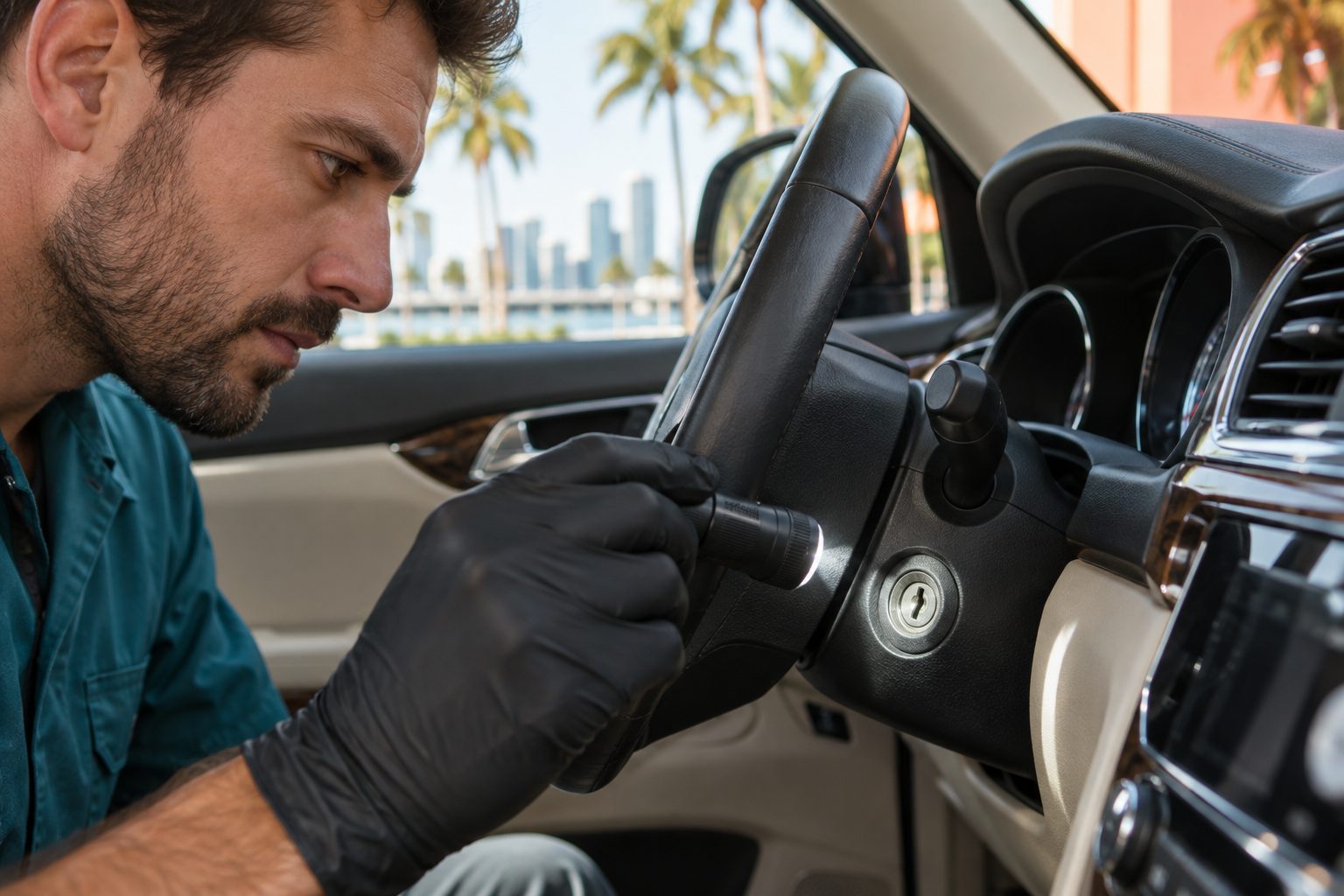
24/7 Locksmith Miami opens all of those, and the approach is the same in principle and completely different in practice. This page covers how residential hardware actually fails, how a non-destructive opening is attempted and in what order, when drilling is the right call, what the local building stock changes, and what you should do before a technician arrives. The number is (786) 539-3980.
The first question is whether the lock is working. A door that is locked with the key inside is a straightforward access problem. A key that enters but will not rotate suggests worn or corroded pins, debris in the keyway, a wrong key, or a plug that has seized in the shell. A key that rotates but does not move the bolt suggests a failed tailpiece, a broken spindle, a stripped cam or, on a mortise lock, a broken internal component. A bolt that throws partway suggests strike misalignment, not a lock fault at all.
Each of those points somewhere different. A seized plug will not pick, so effort spent trying is wasted. A broken tailpiece means the cylinder can be perfectly picked and the door will still not open, because the cylinder is no longer connected to anything. A misaligned strike means the correct repair is to the frame, not the lock. Establishing which of these you actually have, by looking at the door and asking a few targeted questions, is what determines whether the opening takes five minutes or an hour.
The order runs from least to most invasive. Bypass first where the hardware allows, because it avoids the cylinder entirely: shimming a spring latch on a door with sufficient gap, using a latch slip tool where the latch is not deadlocked, or an under door tool where there is clearance and an interior lever to hook. Next comes picking: single pin picking, setting each driver at the shear line one at a time, or raking on cylinders with loose enough tolerances to respond to it.
Then come the intermediate techniques the hardware sometimes permits, such as decoding a cylinder to determine its bitting and cutting a working key on the spot, which has the advantage of leaving you with a key rather than an opened door. Drilling is last. When it is the right answer, it is aimed at a specific shear line, driver pin stack or hardened insert, the cylinder is consumed and replaced, and the door leaf, frame and finish are untouched. That distinction, between consumed hardware and damage, is the whole point.
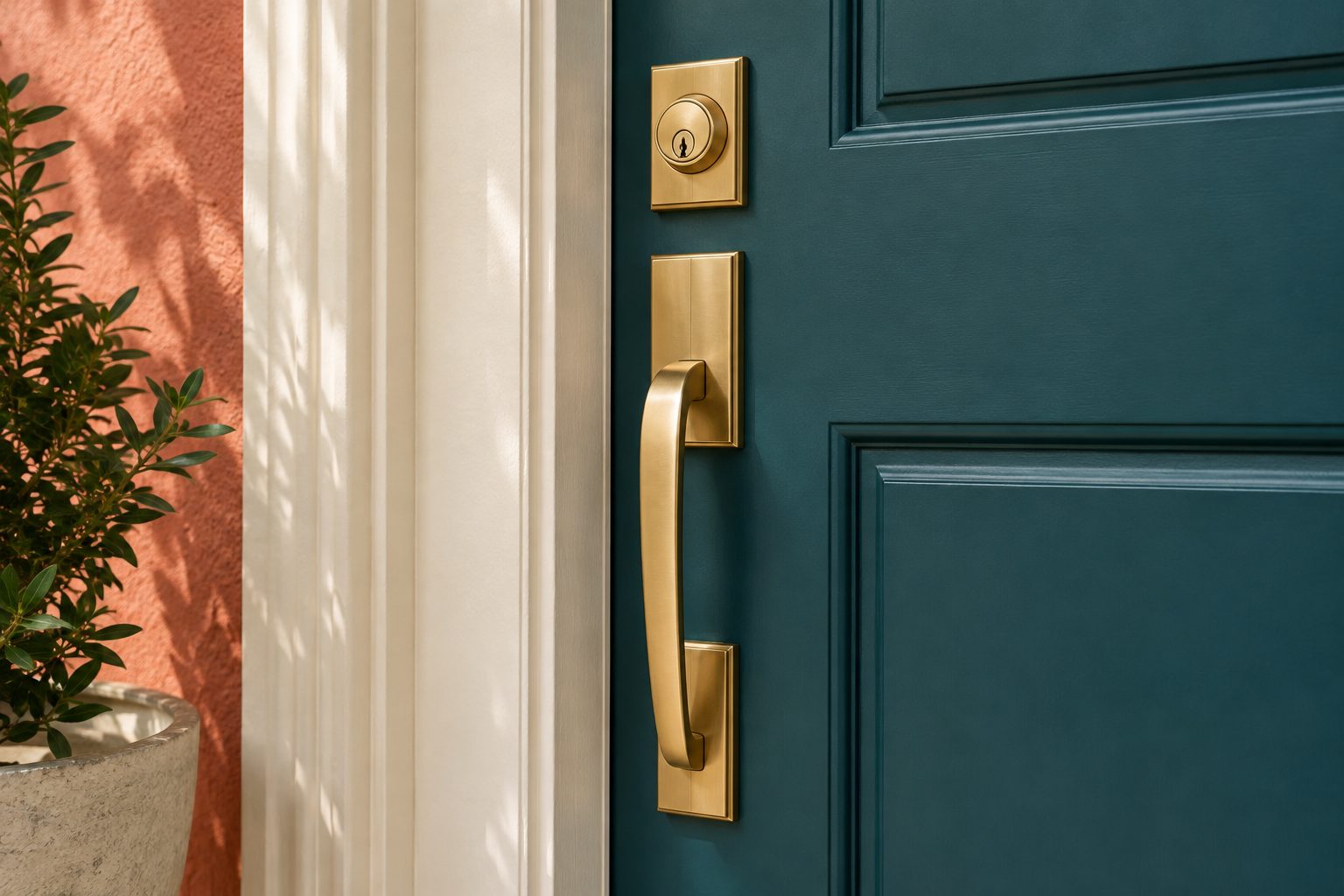
The dominant residential hardware across the county's concrete block belt is a bored cylindrical knobset or lever with a 2 3/8 or 2 3/4 inch backset, plus a separate deadbolt above it. It fails in predictable ways. The latch spring weakens until the latch no longer projects fully and the door stops staying shut. The spindle or the retractor wears and the knob turns without operating the latch. The cylinder's pins pick up grit and corrosion and the key starts needing a jiggle, which is the warning sign before it stops entirely.
Deadbolts fail differently. The throw is supposed to be a full inch into the strike, and when a jamb shifts or a strike box was never deep enough, the bolt throws partway and the lock feels stiff. Owners respond by forcing it, which wears the cam and eventually breaks the tailpiece. In masonry framed openings, which describes most CBS houses in Hialeah, Westchester, Flagami and older Kendall, the strike side is anchored into block and is rarely the weak point. The slab and the cylinder are.
The 1920s fabric of Little Havana, Coral Way, Shenandoah, Coconut Grove and especially Coral Gables carries mortise locksets: a rectangular lock body let into a pocket in the door edge, with a handle, a thumbturn and a separate cylinder on one escutcheon. Some are bit key locks predating pin tumbler entirely. Some are early pin tumbler bodies with cylinders that are no longer manufactured. Many carry period knobs, thumbturns and escutcheons that owners reasonably want retained.
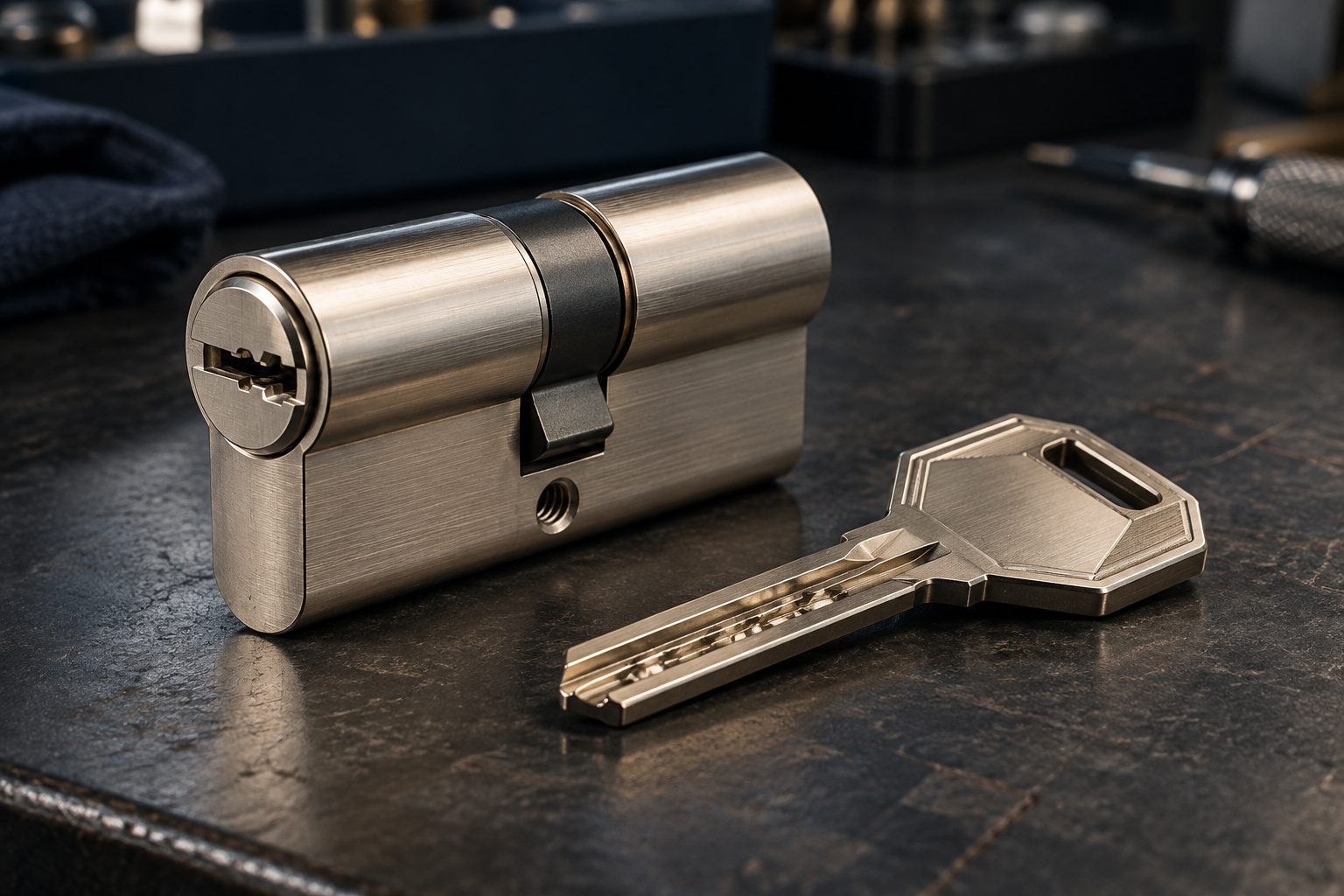
These fail from wear inside the case: broken springs, worn hub and follower, a detached or bent stop lever, or a deadbolt that no longer clears because the case has shifted in its pocket. The correct repair is usually to open the case, replace the failed component and rekey or replace the mortise cylinder, keeping the body and the trim. Dropping a modern bored knobset into a mortise pocket is almost always wrong: it leaves a hole in the door edge, loses the trim, and in Coral Gables it may also be a reviewed exterior alteration.
Across Hialeah, Little Havana, Allapattah, Liberty City, Westchester and much of the older concrete block housing, a wrought iron security bar door, commonly called a reja, sits in front of the entry door. It is not decorative. It carries its own lock, typically a narrow stile mortise lock or a rim lock, and it is frequently keyed differently from the main door. That means most lockouts on those houses are two lock problems and the outer lock has to be dealt with first, before anyone can even reach the entry door.
Bar door locks present real technical differences. The stile is narrow, so the lock body is narrow, which limits the pinning and sometimes the tooling. They live fully exposed to weather, so corrosion is heavier than on a sheltered entry lock. They are often older and lower grade than the deadbolt behind them, which cuts both ways: easier to open, but also easier to attack, which undermines the point of having them. Tell us on the phone whether there is a bar door and whether it is locked.
Anything built or rebuilt in this county after the post Andrew code tightening, and especially after 2002, is likely to carry an impact rated entry assembly with a Miami-Dade Notice of Acceptance. The critical point is that an NOA is issued for a complete tested assembly and configuration, not for loose hardware. The slab, frame, hinges, threshold, fasteners and lock are all part of the listing, and a hardware substitution outside that listing voids the approval for that opening.
Many of these assemblies use multipoint locking, where a single lever or thumbturn throws a centre latch plus top and bottom shootbolts through a gearbox running the height of the door edge. When a multipoint fails, the symptom is usually a handle that will not lift or that lifts with no resistance, and the cause is a stripped gear or a broken drive within the gearbox. Multipoint gear is not interchangeable across manufacturers, so replacement means matching the original family. Substituting a conventional bored lock and deadbolt breaks the assembly.
A unit door in a tower in Brickell, Aventura, Sunny Isles Beach, Edgewater or Dadeland is normally a fire rated hollow metal or rated wood slab in a steel frame, fitted with a cylindrical or mortise lockset plus a deadbolt, hung on a closer. The fire label constrains what can be done: self closing and positive latching have to survive, nothing may be through bolted into an unrated slab, and no surface deadbolt may defeat the closer. That rules out several fixes that would be fine on a single family house.
Most towers also run a building wide master key system with construction and grand master levels, frequently on a restricted or patented keyway controlled by the management company. That means a unit rekey is pinned into the existing system and top master rather than being made free standing, and a replacement cylinder may have to come through the association rather than off the service vehicle. The lockout itself is unaffected. What comes after it is shaped entirely by whose system the door belongs to.
Aluminum sliding glass doors are near universal in the county's 1950s to 1970s ranch housing and remain common in newer construction. They use a mortise style hook latch engaging a keeper in the jamb, frequently supplemented by a foot bolt or a bar in the track. They fail through worn rollers that let the panel sag out of alignment with the keeper, corroded latch hooks that no longer seat, and keepers that were never adjusted after the frame settled. The symptom is a door that will not lock or that locks and then will not release.
People often ask whether a locked out homeowner can simply come in through a patio door. Sometimes, if it was left unlocked. But a properly secured slider with a seated hook latch and a track bar is a genuine barrier, and forcing a glass panel is the worst possible outcome of a lockout. It is a better idea to treat the slider as a security question in its own right, since on many of these houses it is the least resistant opening on the building while the front door carries a deadbolt and a bar door.
No residential opening happens without establishing that the person asking has the right to be inside. The normal standard is photo ID plus something connecting you to the address: a lease, a utility bill, mail addressed to you at that address, a closing or mortgage document, or a property manager or building front desk who can confirm you live there. In a managed building this is usually quick, because the desk already knows who lives in which unit.
The difficult cases are worth understanding before you are in one. A landlord cannot have an occupied unit opened or rekeyed on demand. Two people on the same deed in a dispute present two equal claims and a technician who is not a court. A roommate whose name is not on the lease, an adult child of an owner, and a former partner with a plausible explanation are all cases where the answer may be no. Those refusals are the same protection working for you when someone else stands at your door.
Walk the building first. Check every exterior door including the garage to house passage door and any side or rear entry, and check whether a window was left unlatched, though do not climb anything. Find out whether a spouse, neighbour, family member or property manager holds a spare, because retrieving a spare beats any service call. Gather your identification and proof of address, clear the approach to the door, secure any dog, and turn on an exterior light if it is dark.
Some situations are not lockouts. If someone is trapped inside, if there is a medical emergency behind the door, or if a child is alone inside, call 911 first. If the door was forced and you suspect a break in, do not enter and do not have anything repaired until police have been involved. If the key is lost rather than inside, the job includes a rekey or a lock change, not just an opening, because a key in unknown hands is a live problem. Say which of these you have when you call.
Choose your neighborhood for local details: