Miami-Dade County · 24/7
Lock Change & Installation in Miami
New deadbolts, handlesets and hardware installed right.
Up-front pricing · Damage-free first · Mobile units county-wide
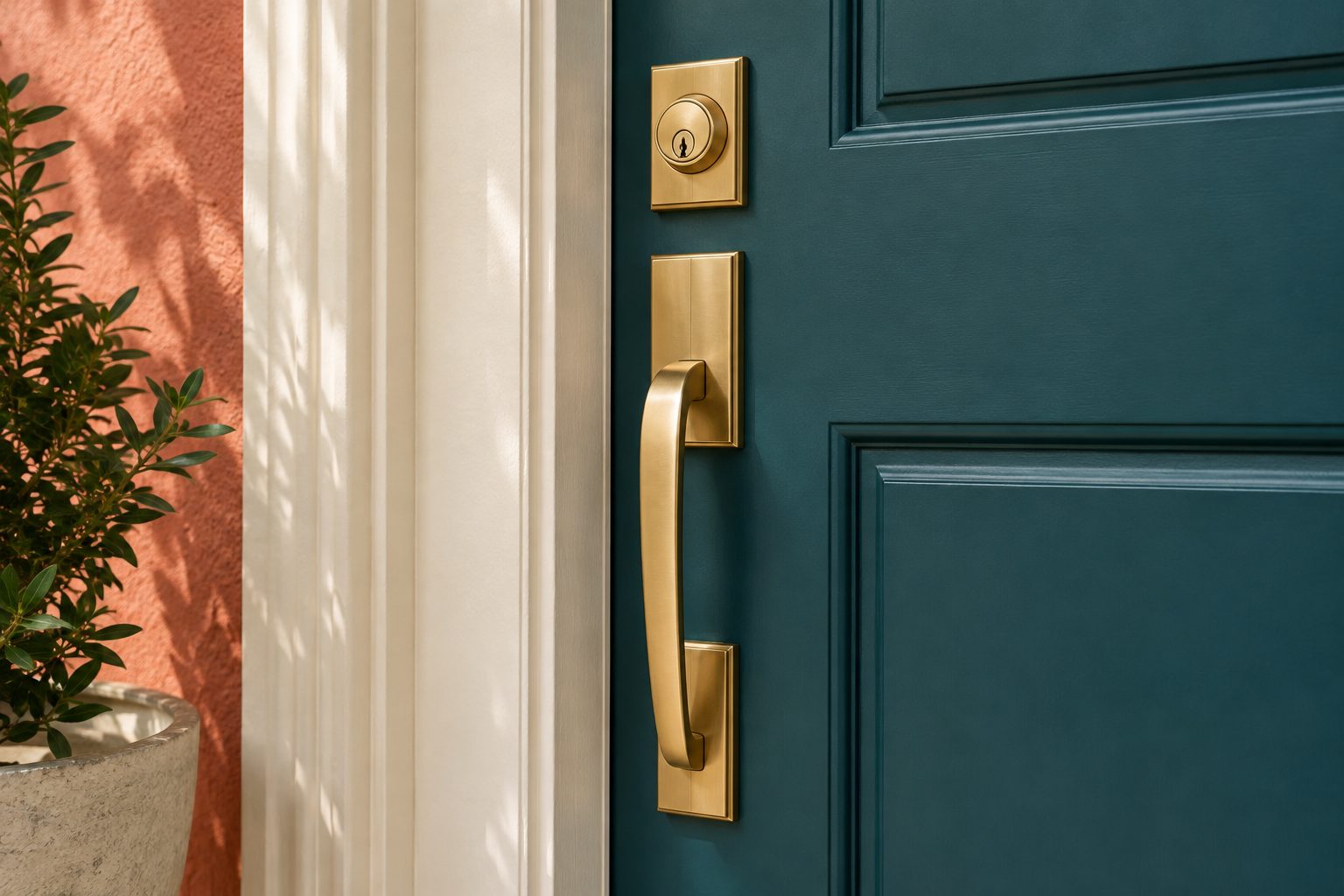
New deadbolts, handlesets and hardware installed right.
Changing a lock should be a decision rather than a default. Half the time someone asks for new locks, what they actually need is a rekey, which changes who holds a working key at a fraction of the cost and leaves a perfectly good lock on the door. The other half of the time the hardware genuinely is the problem, and repinning it would be putting fresh pins into something that was going to fail anyway. Knowing which half you are in is the first part of the work.
When replacement is right, the specification is where jobs go wrong. Function, grade, backset, bore diameter, door thickness, handing, strike preparation and finish all have to be correct, and a lock that is wrong on any of those either does not fit, does not secure, or traps someone behind it. In Miami-Dade there is an additional constraint that exists almost nowhere else: exterior assemblies in the High Velocity Hurricane Zone carry a Miami-Dade Notice of Acceptance for a complete tested configuration, and the lock is part of that listing.
24/7 Locksmith Miami changes residential and commercial hardware across the county, from 1920s mortise bodies in Coral Gables and Little Havana to bored knobsets in Hialeah and Westchester, multipoint gearboxes in post Andrew construction across Cutler Bay and West Kendall, and Grade 1 commercial hardware in Doral and Downtown. Call (786) 539-3980 and describe the door, because the door determines almost everything about what can go on it.
Rekey when the hardware is sound and the problem is who has keys. Replace when the hardware itself has failed, when the function is wrong for the opening, when the grade is inadequate for the traffic, or when you are moving to a restricted keyway that the existing cylinder cannot accept. Those are the honest boundaries, and a technician who recommends replacement for a problem a rekey would solve is either not diagnosing or not being straight with you.
The symptoms that point to replacement are specific. A plug that has worn loose in its shell, so the key rattles and the cylinder turns with almost anything. A bolt corroded enough to drag every time it throws, which is routine on exterior hardware anywhere near the water. A latch that no longer projects fully because the spring has weakened. A cylinder whose keyway has been damaged by a forced entry attempt. A lock where an internal component has broken and parts are no longer available. Fresh pins solve none of those.
Lock function describes what the lock does, not how strong it is, and the wrong function produces a door that either cannot be secured or cannot be escaped. A passage set latches and has no lock at all, correct for a hallway door and useless on an entry. A privacy set locks from inside with an emergency release from outside, correct for a bathroom and not security hardware. An entry set locks from outside by key and from inside by thumbturn or button.
Commercial functions are more varied and more consequential. A storeroom function lever is always locked on the outside and always free on the inside, so it cannot be left unlocked accidentally, which is right for a stockroom and wrong for an office people expect to leave open. Classroom, office, and exit only functions each behave differently. Specifying by appearance rather than by function is how a business ends up with a stockroom that anyone can walk into or an office that locks people out every time the door closes.
A bored cylindrical lockset installs into a large cross bore through the face of the door and a smaller edge bore for the latch, with a backset of 2 3/8 or 2 3/4 inches measured from the door edge to the centre of the cross bore. It is the dominant residential hardware in the county's concrete block housing and in a great deal of light commercial work. Its limits are structural: the door is weakened at the bore, and the mechanism has to fit inside a cylinder of limited diameter.
A mortise lockset installs into a rectangular pocket routed into the door edge, holding a substantial lock case with room for a latch, a deadbolt, a hub, springs and multiple functions in one body. Mortise hardware is heavier, more serviceable and longer lived, which is why it dominates commercial entries, older houses and institutional work. It is also less forgiving: the pocket, the faceplate, the trim preparation and the cylinder collar all have to match, and converting between mortise and bored is a door modification rather than a swap.
A deadbolt is only as good as what it throws into. The bolt should project a full inch into a strike box that reaches solid material, and the strike should be secured with screws long enough to reach the framing rather than just the jamb trim. In the county's concrete block housing, where openings are framed in masonry with steel jambs anchored into block, the strike side is genuinely solid and the weak point sits elsewhere, in the door slab or the cylinder.
In wood framed construction and in townhouse jambs across Miami Lakes, older Kendall and parts of West Kendall, the opposite is true: the jamb is the weak point and a deadbolt with a one inch throw into a shallow strike held by short screws will take a shoulder before the lock ever fails. A box strike and long screws into framing is the cheapest meaningful security upgrade available, and it is routinely skipped. It is worth doing at the same time as any deadbolt change.
A double cylinder deadbolt takes a key on both sides instead of having a thumbturn inside. It exists because a thumbturn next to glass, or reachable through a barred window or a mail slot, can be turned from outside, which defeats the lock entirely. In Miami-Dade, where sidelights, glass panels beside doors and barred openings are extremely common across Hialeah, Little Havana, Allapattah and older Kendall, that is a real attack path rather than a theoretical one.
The tradeoff is egress, and it is serious. In a fire, in smoke, at night, anyone inside needs a key in hand to get out through that door. Storing the key in the lock defeats the purpose. Storing it far away defeats the escape. Codes restrict double cylinder hardware on some occupancies for exactly this reason. It is a genuine decision that depends on the household, how many other exits exist, whether children or anyone with mobility limits live there, and whether a key can be kept reliably close without being reachable from outside.
Miami-Dade and Broward sit inside the High Velocity Hurricane Zone, where exterior assemblies require a Miami-Dade Notice of Acceptance including windborne debris impact testing rather than the statewide product approval. The point that governs lock work is that an NOA is issued for a complete tested assembly and configuration, not for loose hardware. The slab, frame, hinges, threshold, fasteners and lock are all part of the listing, and substituting an unlisted equivalent voids the approval for that opening.
Many of these entries use multipoint locking, where a lever or thumbturn drives a gearbox running the height of the door edge, throwing a centre latch plus top and bottom shootbolts. Multipoint gear is not interchangeable across manufacturers, so a failed gearbox means matching the original family rather than fitting whatever is available. Replacing a multipoint entry with a conventional bored lock and deadbolt breaks the assembly, which can matter for insurance and for inspections at resale. Continuous geared hinges are common in tested assemblies for the same reason.
Condominium unit doors, stairwell doors, corridor doors and many commercial openings are fire rated assemblies, and the label on the hinge edge is a legal document rather than a sticker. The assembly has to remain self closing and positive latching, which means nothing may defeat the closer and nothing may prevent the latch from engaging. Surface mounted deadbolts, add on slide bolts, wedges and chain guards that hold a door ajar all break that, however reasonable the reason for wanting them.
Preparation is equally constrained. Through bolting into a slab that is not rated for it, cutting new holes outside the permitted preparation, and fitting hardware without the correct listing all compromise the label. On a condominium door in Brickell, Aventura or Sunny Isles Beach this intersects with association rules about what may appear on a corridor facing door. The practical result is that the menu of options on a rated door is narrower than on a house, and the alternatives available are worth discussing properly.
Commercial hardware is graded by cycle testing, and the difference is not cosmetic. A residential grade lever on a door cycled a few times a day may last years. The same lever on a restaurant back door, a warehouse man door or a medical suite entry cycled several hundred times a day will fail in months, usually by the spring sagging until the lever droops and the latch stops retracting cleanly. Grade 1 and Grade 2 hardware uses heavier springs, cast rather than stamped internals and serviceable components.
Narrow stile aluminum storefront doors, which line every strip centre in the county, use their own vocabulary: Adams Rite style MS deadlocks with 1-1/8 inch mortise cylinders, deadlatches with paddle or lever trim, offset pivots or continuous geared hinges, and overhead concealed closers. Exit devices on required egress openings are a separate category with a hard rule attached: nothing may be installed that defeats free egress, so no padlocks, hasps or add on deadbolts on an exit door regardless of what has been stolen.
Finish specification is treated as an aesthetic choice and is actually a durability one. Anything within reach of salt air, which in this county means Key Biscayne, Surfside, Bal Harbour, Sunny Isles Beach, Miami Beach, the Grove waterfront and every coastal pool gate, mailbox bank and storage cage, attacks plated hardware relentlessly. Bright brass plating over a pot metal body fails quickly: the plating pits, moisture reaches the base metal and the lock seizes from inside.
Satin stainless in the 630 finish is the practical baseline for exposed hardware, and Type 316 stainless is the right specification for the most exposed openings. Solid brass or bronze bodies outlast plated pot metal by years even inland. Interior hardware can be specified for looks. Exterior hardware within sight of the water should be specified for corrosion first. A lock that binds a little more after every rainy season is usually telling you the finish was wrong rather than that the lock is worn out.
Hardware is the dominant variable, and the range is wide: a residential deadbolt, a Grade 1 mortise lockset, a multipoint gearbox matched to an NOA listing, a commercial exit device and an interchangeable core system are entirely different tiers. Then labour, which depends on whether the new hardware matches the existing preparation or requires modification to the door, and whether a strike or frame needs work. Then the number of openings, the finish specification and the service call across the county.
Before a technician arrives, measure and photograph. Note the backset from door edge to knob centre, the door thickness, whether the door is metal, wood or fiberglass, and whether it swings in or out and which way the hinges face. Photograph the existing hardware from both sides and the edge of the door. If the door is an impact rated assembly, look for the NOA or product label, usually on the frame or the edge. That information determines what comes on the vehicle and whether the job finishes in one visit.
This service is available across all of Miami-Dade County, see our full coverage map or just call and tell dispatch where you are.
One number, any hour: a live dispatcher and a mobile technician near you.