Miami-Dade County · 24/7
Mailbox & Cabinet Locks in Miami
Small locks, done right the first time.
Up-front pricing · Damage-free first · Mobile units county-wide
Small locks, done right the first time.
Mailbox locks are the least glamorous service in the trade and among the most frequently needed, because the hardware is small, cheap, fully exposed and asked to work for decades. A cam lock in a condominium mail bank in Aventura, a gang box in a Hialeah walk up, a cluster box unit serving a West Kendall subdivision, a wall mounted box on a Coral Gables porch and a locking curbside box on a Homestead rural route are all doing the same job with wildly different hardware and wildly different rules about who owns it.
Ownership is the complication that makes this service different from every other kind of lock work. Some mail receptacles are postal service property and cannot be serviced by a private locksmith at all. Others belong to the property owner or the association. Others belong to the individual resident. The first question on any mailbox call is therefore not what kind of lock it is, but whose lock it is, because getting that wrong wastes a visit and can create a genuine problem.
24/7 Locksmith Miami services the mailbox hardware that private locksmiths can legitimately work on across Miami-Dade, including rekeys, replacements, broken key extraction, openings where ownership is established, and upgrades on private and association owned installations. This page explains the hardware, how to identify what you have, why the ownership question matters, and what to establish before calling. The number is (786) 539-3980.
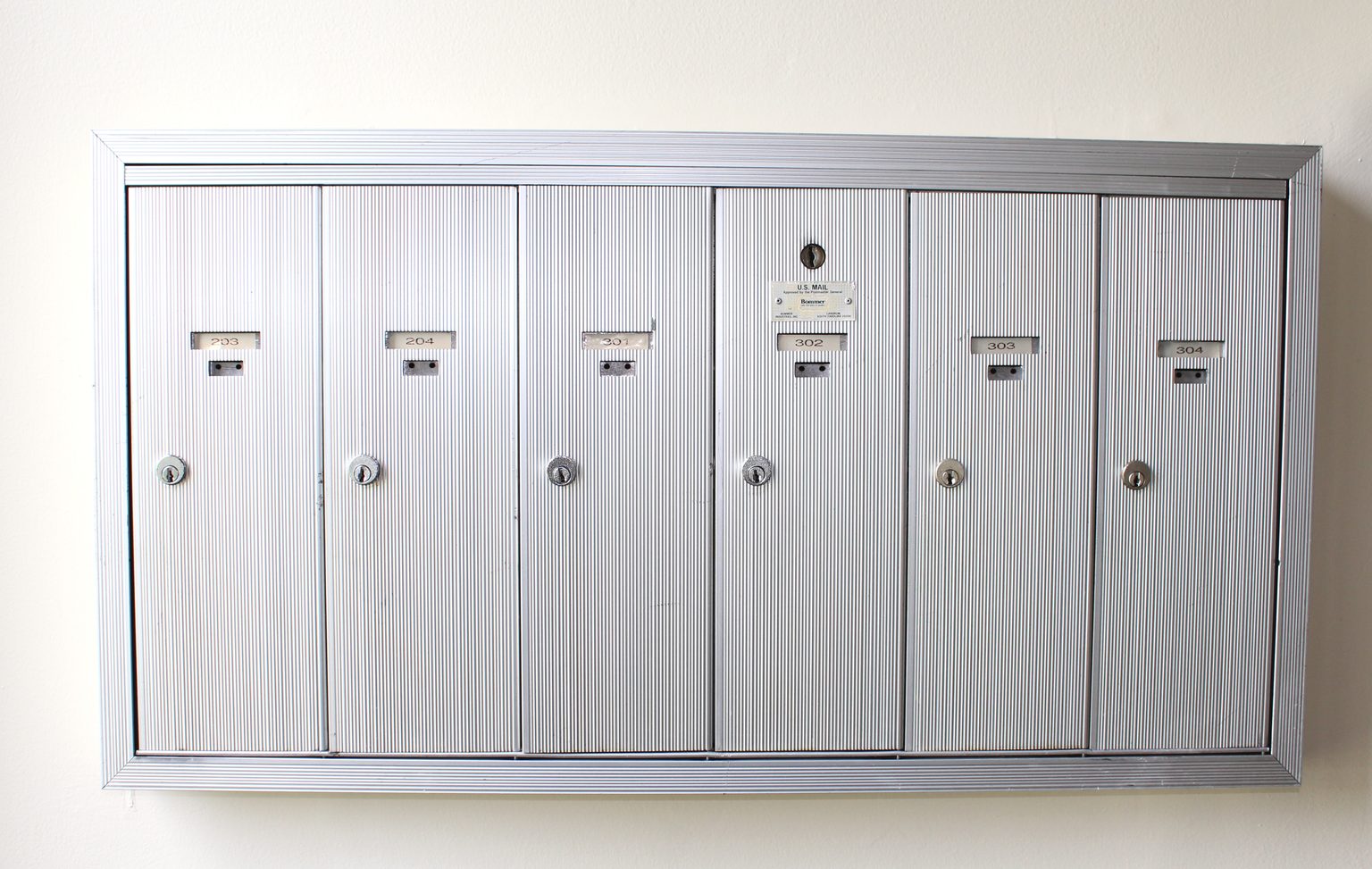
Mail receptacles fall into categories with different rules. Cluster box units and centralised delivery equipment installed for a subdivision are frequently postal service property, and their locks are serviced by the postal service rather than by a private locksmith. Apartment and condominium mail banks are commonly owned by the property, with the postal service holding an arrow lock for the master access panel while individual tenant compartments belong to the building. Private wall and post mounted boxes at single family homes belong to the homeowner outright.
The practical consequence is that the correct answer on some calls is to direct you to your local post office or your property manager rather than to open anything. That is not a brush off. A private locksmith working on postal service equipment is not a grey area. Where the compartment or the box is private or association property, a locksmith is the right and usually the only practical option, because the postal service will not service private hardware either. Establishing which you have takes one conversation.
Almost all mailbox hardware uses a cam lock: a small cylindrical body with a threaded barrel, a mounting nut on the inside, and a flat metal cam on the tail that rotates to engage a catch or a strike in the door. Replacing one requires matching three separate dimensions, and getting any of them wrong means a lock that either will not mount or will not latch. The first is barrel length, which must match the thickness of the door it passes through.
The second is cam shape and offset, since cams come straight, offset, bent and in varying lengths, and the cam has to reach and engage the specific catch in that door. The third is the mounting nut and thread, which vary by manufacturer. Add rotation, since some cam locks turn ninety degrees and some a hundred and eighty, and clockwise versus counterclockwise operation matters for which way the cam sweeps. That is why the best preparation for a mailbox lock call is a photograph of the back of the door with the old lock still in place.
Multi-tenant mail banks are extremely common across Miami-Dade given the county's density, and they have a specific structure. The bank comprises individual tenant compartments each with its own cam lock, plus a master access panel or door that the postal carrier opens to load mail from behind. The compartment locks are usually property hardware; the master panel is typically postal service controlled. The correct work for a private locksmith is the individual compartments and any parcel or outgoing mail hardware that belongs to the property.
The recurring jobs are predictable. Tenant turnover means compartment locks get rekeyed or replaced constantly, and a property that has not tracked its mailbox keys usually has several compartments where nobody knows how many keys exist. Broken keys are common because the cylinders are small and the keys are thin. Corroded locks are common in open air mailrooms and in coastal buildings. Property managers are better served by keeping a stock of spare cam locks matched to their bank than by calling for each individual compartment.
Centralised cluster box units serve most newer subdivisions across West Kendall, the Hammocks, Doral, Miami Lakes, Cutler Bay and the post Andrew build out of south Dade. A pedestal mounted unit holds a grid of compartments plus one or more parcel lockers. Where the unit is postal service equipment, its locks are serviced through the postal service and a resident who has lost a key is directed there, generally with identification and proof of address.
Where a cluster unit is private, which happens in some gated communities and in association owned installations, the association controls it and a private locksmith can work on it with the association's authorization. The distinction is not always obvious from looking at the box, which is why the property manager or the association is the right first call. Parcel lockers add their own hardware, usually a separate lock and a one time use key drop arrangement, and those are almost always part of the postal equipment rather than the resident's.
A wall mounted or post mounted locking mailbox at a single family house belongs to the homeowner, and this is the clearest case for private locksmith work. The hardware ranges from a simple cam lock in a sheet metal door to heavier locking security boxes with anti fishing baffles and reinforced doors. Cam locks in these boxes fail predictably: the cylinder corrodes, the cam bends, the mounting nut works loose and the whole lock spins in its hole, or the key wears thin and snaps.
Upgrades here are worth considering rather than just replacing like for like. A locking box with a narrow incoming slot and an internal baffle resists mail fishing, which is a real problem and a common route to identity theft. Heavier gauge steel resists prying. On coastal and exposed installations, specifying stainless hardware rather than plated pot metal roughly doubles the useful life. And if the box itself is corroded through, replacing the lock in it is money spent on a container that is failing anyway.
Mailbox cam locks are small, inexpensive, usually plated pot metal, and permanently outdoors. In Miami-Dade that combination is brutal. Humidity alone is enough. Near the water, in Key Biscayne, Surfside, Bal Harbour, Sunny Isles Beach, Miami Beach and anywhere with bay exposure, salt attacks the plating, the plating pits, moisture reaches the base metal and the plug seizes progressively in the shell. The key needs a wiggle, then more force, then it snaps.
The fixes are specification rather than maintenance. Stainless cam locks cost more and last far longer in an exposed position. Brass bodies outlast pot metal. A dry lubricant rather than a general purpose penetrating oil keeps grit from being attracted into the keyway. And a mailbox door that has warped or a bank panel that no longer closes squarely puts side load on the cam, which accelerates everything. If you replace the same lock every eighteen months, the specification is the problem, not the lock.
Mailbox keys are thin, small and frequently duplicated from duplicates, and the cylinders they operate are shallow. That produces a lot of broken keys. Extraction in a mailbox cam lock is harder than in a residential deadbolt for two reasons: the keyway is short, so there is less blade to engage and no room for two extractors working together, and the lock body is often loose in its mounting, so the whole cylinder rotates when tension is applied and the extractor cannot get purchase.
In practice, many broken key jobs in mailbox hardware end in replacement rather than recovery, and that is frequently the right economic answer given what the lock costs. The exception is where the compartment is part of a keyed system, where a property has all compartments on a common master or where the resident holds a restricted key, in which case careful extraction preserves the keying. As with any broken key, do not use glue, do not push anything into the keyway, and keep the half you are holding.
A well run multi-tenant mail bank has a keying plan. Each compartment has its own change key, and the property holds a master that operates all compartments for maintenance and turnover, separate from whatever postal access exists for the loading panel. That structure makes turnover fast: a compartment gets rekeyed or its cam lock swapped, the tenant gets keys, and the property master still works.
Poorly run banks have no plan at all, which produces the situation most managers eventually face: an unknown number of keys in circulation, several compartments where the key has been lost entirely, and no record of which lock is which. Rebuilding that is straightforward but is a project rather than a service call, and the sensible time to do it is during a turnover cycle rather than in an emergency. Keeping a small stock of pre keyed spare cam locks matched to the bank makes every future turnover a five minute job.
Opening a mail receptacle demands verification for obvious reasons, and the standard is at least as strict as for a residential door. For a private box at a house, photo ID plus proof that you own or lawfully occupy the property. For an apartment or condominium compartment, photo ID plus a lease or ownership documentation, and in almost all cases the property manager or front desk confirming that the compartment is assigned to you. Mail theft is common enough that nobody should be casual about this.
Where the property manager will not or cannot confirm, the answer is that the work does not happen until they do. That protects you more than it inconveniences you. And where the receptacle turns out to be postal service equipment rather than property hardware, the correct route is through the local post office with identification and proof of address, which is a process rather than a service call. Establishing all of this on the phone saves a wasted visit.
The hardware itself is inexpensive, so labour and access dominate. The variables are how many compartments are involved, whether the lock can be sourced to match the existing bank, whether a broken key extraction is needed, whether the door or panel needs attention as well, and the service call. A single compartment in a condominium mailroom is quick work. Rekeying an entire bank during a turnover cycle, or setting up a master plan for a property, is a scheduled project.
Before calling, do three things. Establish ownership by asking your property manager or association whether the compartment hardware is theirs, and if it is a cluster unit, whether it is postal equipment. Photograph the back of the door with the existing lock in place, showing the cam shape, the barrel and the mounting nut, since those three dimensions determine the replacement. And gather identification and proof that the compartment is assigned to you, because nothing opens without it.
This service is available across all of Miami-Dade County, see our full coverage map or just call and tell dispatch where you are.
One number, any hour: a live dispatcher and a mobile technician near you.